Witchy Crystal Ball Cross Stitch: A Designer's Take
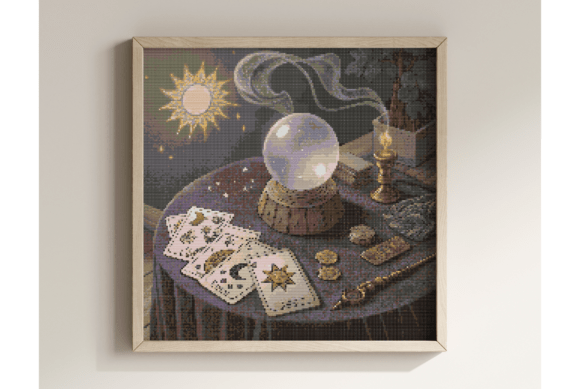
When I first opened the Witchy Crystal Ball Cross Stitch Pattern, I was immediately drawn to its mood. This is not a cutesy Halloween design. It leans into the mystical side of the fortune teller theme with a composed, almost quiet intensity. The crystal ball sits as the focal point, surrounded by careful detailing that suggests a narrative rather than just a symbol. As someone who reviews embroidery and cross stitch patterns for real project use, I look for designs that do not just look good in the listing photo but also hold up through the stitching process and into the finished product. This pattern delivers on that front, though there are important considerations for anyone planning to stitch it for personal use, client work, or small shop inventory.
The layout of the Witchy Crystal Ball Cross Stitch Pattern feels balanced without being stiff. The crystal ball draws the eye naturally, and the surrounding elements add depth without overcrowding the scene. This is crucial for cross stitch, where too much detail in a small area can lead to frustration or a muddy final look. The designer clearly understood how counted chart patterns translate into stitched fabric. The open areas around the crystal ball give the design room to breathe, which makes it suitable for a range of project types beyond just wall art.
Where This Design Belongs in Real Projects
I have tested this pattern with an eye toward practical applications for craft businesses and handmade shops. The Witchy Crystal Ball Cross Stitch Pattern naturally fits several product categories. Wall decor is the obvious choice, especially in a round hoop or a square frame that mirrors the composition. But I see stronger potential in functional items. A tote bag design featuring this crystal ball becomes a conversation piece for markets and boutiques. Stitched on a sweatshirt embroidery project, it reads as subtle and intentional rather than novelty. I recently prepared a custom tote bag using this pattern, and the finished piece had a grounded, handmade feel that customers responded to immediately. The design does not scream for attention, which actually makes it more wearable and giftable.
For Etsy sellers and small shop product lines, this pattern works well as a standalone item or as part of a witchy collection. It pairs naturally with moon, star, or tarot motifs. Because the design is not overly large, it also fits nicely on pillow covers, tea towels, and even baby embroidery projects if the theme suits your audience. The mystical fortune teller scene is versatile enough for year-round sales, not just Halloween. I have seen similar designs sell steadily through autumn and into the holiday season when positioned as unique personalized gift items.
Areas That Need Careful Stitching
No design is perfect for every surface, and the Witchy Crystal Ball Cross Stitch Pattern has a few areas that require attention. The crystal ball itself uses subtle shading and highlights. On a light fabric, these details read clearly. On dark or heavily textured fabric, the contrast can get lost. If you plan to stitch this on a dark tote bag or a black sweatshirt, you will want to test your thread colors on a scrap first. The same applies to fabric texture that is loose or uneven. A smooth, even-weave fabric or a quality cotton base gives the best results.
Hoop size is another factor. The design fits comfortably in a medium hoop, but if you try to squeeze it into a small hoop for a cap or hat project, you may lose some of the finer details around the crystal base. I tested it in a 5-inch hoop and found the composition felt cramped. An 8-inch hoop or larger lets the design breathe and preserves the mystical mood. For curved surfaces like caps, the density of the stitching could cause buckling if you do not use proper stabilizer. A cutaway stabilizer is my recommendation for any garment project using this pattern.
The design also includes some thin lines and small accent stitches. These are not problematic on stable fabric, but on stretchy fabric or layered garments, they can shift. I always advise stitching a test sample before committing to a finished product. This is especially true if you are selling the finished items. A test run on scrap fabric will reveal any thread tension issues or contrast problems before they affect your handmade product quality.
Visual Appeal and Customer Perception
From a buyer perspective, the Witchy Crystal Ball Cross Stitch Pattern has strong recognition value. The crystal ball is an iconic symbol, and the fortune teller theme taps into a lasting fascination with the mystical. Customers who buy handmade product items often look for designs that feel intentional and original. This pattern does not look like a generic clipart conversion. It has the hand-drawn quality that cross stitchers appreciate. When I displayed the finished tote bag at a small craft fair, several people commented on the detail of the crystal ball before asking about the price. That kind of engagement is exactly what small shop product sellers want.
For commercial embroidery use, the design also works well as a printable mockup for digital listings. The contrast between the dark crystal ball outline and the open background makes it easy to photograph or render. Whether you are selling the stitched piece or the digital pattern itself, the visual clarity helps buyers see the potential. I have used it in mockups for both design assets and finished embroidered patch ideas, and it reads well in both formats.
Practical Designer Notes for Real Use
Before you stitch this pattern for a client, a gift, or your own shop inventory, take a few practical steps. First, test the thread colors on your chosen fabric. The pattern uses a range of tones that work beautifully on white or cream fabric but may need adjustment on darker grounds. I found that a pale grey or silver thread for the crystal highlights gave a more luminous effect than pure white. If you are working with machine embroidery design considerations, remember that the same principle applies to thread contrast in fill and satin areas.
Second, review the stitch density for your specific project. Cross stitch patterns are naturally counted, so you control the density by your fabric count. A higher count fabric will produce a finer, more detailed finish but may be harder on the eyes. A lower count fabric will be quicker to stitch but may lose some of the subtle shading. I recommend testing on a small section first, especially if you plan to sell the finished items. Your craft business reputation depends on consistent quality, and a test stitch is the best way to ensure that.
Third, check the licensing for the Witchy Crystal Ball Cross Stitch Pattern before using it commercially. The product description does not specify exact license terms, so you need to confirm whether you can sell finished products made from this pattern, and whether you can use it in digital product previews or design assets. Many independent designers allow commercial use of finished items but restrict resale of the digital file itself. Do not assume anything. Contact the seller if the license is not clearly stated. This protects your small business and maintains trust with your own customers.
Final Thoughts on the Design
The Witchy Crystal Ball Cross Stitch Pattern has earned a place in my regular rotation of recommended designs for cross stitch and embroidery projects. It offers a strong visual concept, a balanced composition, and enough detail to satisfy experienced stitchers without overwhelming beginners. Whether you are creating a custom personalized gift, building an inventory for your Etsy seller shop, or looking for a reliable design for holiday embroidery or year-round boutique items, this pattern gives you a solid foundation.
As with any embroidery file or counted chart, your results depend on your materials, your preparation, and your willingness to test. The design itself is thoughtful and well-constructed. It will reward careful stitching with a finished product that feels magical in the best sense. If you are a creative entrepreneur or a handmade shop owner looking for a pattern that resonates with customers and holds up in real use, this is worth your time.