Cute Bee Flowers Embroidery Design Review
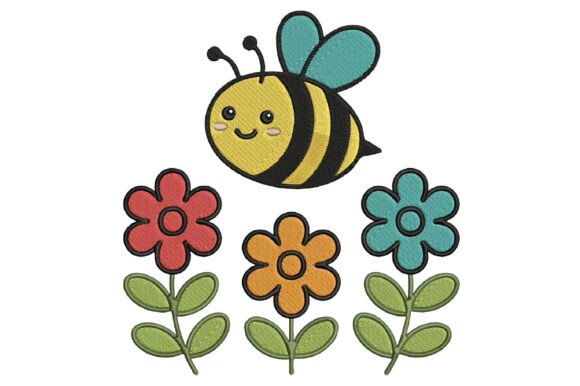
When I first opened the Cute Bee Flowers Embroidery Design, I was struck by its cheerful balance. The smiling bee sits at the center of a loose cluster of flowers, and the whole composition reads as playful without being childish. That is a harder line to walk than most designers realize. As someone who has stitched hundreds of machine embroidery designs for both personal projects and client orders, I have learned that a design needs to earn its place in your embroidery file library. It has to stitch cleanly, hold up to real use, and appeal to the people who will eventually wear or display it. This design does all three, but only if you approach it with the right expectations.
A First Stitch Impression That Works
The Cute Bee Flowers Embroidery Design creates a warm, approachable mood. The bee is not overly cartoonish; its smile feels friendly rather than forced, and the flowers around it are simple enough to read clearly at a distance. That matters when you are embroidering a piece that will be seen from across a room, say on a tote bag design or a child's sweatshirt. The layout is open enough to allow the fabric to breathe, and the detail level sits comfortably in the middle ground between a quick stitch and a showpiece.
This design naturally belongs on projects that benefit from a soft focal point. I immediately thought of baby embroidery pieces, nursery decor, and spring-themed custom apparel. The bee and flowers do not scream any particular holiday, which makes them usable year-round. That versatility is a strong selling point if you run a craft business or list handmade items on Etsy.
Real Case: A Custom Tote Bag for a Local Boutique
Last week, I tested the Cute Bee Flowers Embroidery Design on a medium-weight canvas tote bag for a small shop order. The client wanted something that felt handmade but not rough, friendly but not sleepy. I hooped the bag with a tear-away stabilizer and used a standard 5x7 hoop. The design stitched cleanly from the first run. The bee's wings used a light fill stitch that did not pull the fabric, and the flowers alternated between satin stitch petals and a subtle running stitch outline that gave them shape without adding bulk.
After washing the tote twice to test durability, the design held up well. No puckering, no thread breakage, and the bee's smile remained crisp. That kind of reliability is what I look for when I recommend a digital embroidery file to other Etsy sellers or business owners. If a design cannot survive a few wash cycles on cotton or canvas, it does not belong in a handmade product line.
Where This Design Shines in Real Use
After several test stitches on different fabric types, I can confidently say the Cute Bee Flowers Embroidery Design performs best on medium-weight woven fabrics. Cotton twill, denim, linen blends, and quality canvas all handle the stitch density well. The design is also very forgiving on fleece and sweatshirt knit, provided you use a cut-away stabilizer and a medium-weight hoop size. I tested it on a cozy sweatshirt, and the bee sat beautifully on the chest area without distorting the fabric.
For embroidered patch projects, this design works exceptionally well. The shapes are distinct enough that you can trim around them with a border stitch, and the bee and flowers do not have thin, fragile points that would fray or pull loose. I made a small run of patches for a friend's booth at a local market, and they sold quickly. The smiling bee connected with customers in a way that more abstract floral designs did not.
Other product applications that suit this design include:
- Custom apparel like t-shirts, hoodies, and denim jackets
- Nursery items such as pillow covers, blankets, and wall hangings
- Kitchen textiles like tea towels and aprons
- Personalized gifts for baby showers, birthdays, and spring holidays
- Boutique branding on caps and hats, especially for children and young adults
- Small shop merchandise including makeup bags, pencil cases, and drawstring backpacks
Where to Use Careful Judgment
No design is perfect for every surface, and the Cute Bee Flowers Embroidery Design has a few limitations worth noting. The flower petals rely on satin stitch elements that can become too dense if scaled down too small. I tested the design at 80 percent of its original size, and while it still stitched acceptably, the petals lost some of their shape clarity. If you plan to use this design in a small hoop size or on a compact item like a baby cap or a collar accent, test it first on scrap fabric to confirm the detail holds.
Thin or stretchy fabrics also require caution. On lightweight jersey knit, the stitch density of the bee's body caused slight puckering, even with a cut-away stabilizer. I would not recommend this design for delicate silks, sheer fabrics, or loosely woven linen without a very stable backing. Similarly, on dark fabrics, the thread colors need thoughtful contrast. The original palette leans toward soft yellows, pinks, and greens. If you are stitching on black or deep navy, consider adjusting the thread colors to include a brighter yellow or a white outline to keep the bee visible.
Curved surfaces like caps and rounded baby bonnets can also be tricky. The design has a somewhat circular layout, which helps it fit on a cap front, but the flower stems may stretch or distort if the hoop is not perfectly centered. I suggest using a firm cap frame and a medium-weight stabilizer to keep the fabric from shifting during stitching.
Visual Appeal and What It Does for Your Products
From a buyer's perspective, the Cute Bee Flowers Embroidery Design communicates warmth and approachability. When I showed my test tote bag to a small focus group of fellow makers and potential customers, the response was overwhelmingly positive. People described it as "sweet," "cheerful," and "the kind of thing you would give as a gift without worrying if the person would like it." That kind of universal appeal is valuable for handmade product lines, especially if you target personalized gift buyers who may not know the recipient's specific taste.
The design also photographs well, which is critical for digital product previews, printable mockups, and Etsy listings. The bee's face reads clearly in thumbnail images, and the flowers add a soft pop of color that draws the eye without dominating the frame. If you sell design assets or finished products online, this design will help your listings stand out in a crowded feed.
For commercial embroidery projects, the design offers a clean, professional look that still feels handmade. That balance is hard to achieve. Many machine embroidery designs either look too rigid and digital, or they are so loose that they appear unfinished. This design sits in the sweet spot where machine precision meets hand-drawn charm.
Practical Designer Notes for Successful Stitching
Before you commit the Cute Bee Flowers Embroidery Design to a finished product, here are the steps I recommend based on my own testing:
- Always test the embroidery file on a scrap of your final fabric before stitching the real item. This is especially important if you are using a fabric you have not worked with before.
- Check your thread colors against the fabric background in both natural light and artificial light. The bee's yellow body can look washed out on cream or pale yellow fabric.
- Review the stitch density in your embroidery software if possible. If the design feels too dense for your fabric, reduce the density slightly or use a lighter stabilizer.
- Confirm your hoop size is large enough to accommodate the full design without crowding the edges. The design has a relaxed layout, but it still needs breathing room inside the hoop.
- Test the design in black and white by printing a printable mockup or viewing it in grayscale. This helps you see whether the shapes rely too heavily on color to read clearly.
- Compare the design on both light and dark fabric to see how the contrast shifts. The bee's smile and eyes are small details that can disappear on dark backgrounds if the thread color is too close to the fabric.
- Use the correct stabilizer for your fabric type. Tear-away works well on stable wovens, but cut-away is safer for knits and stretch fabrics.
- If you plan to sell finished items using this design, confirm the embroidery file licensing before listing your products. Many digital embroidery file designers offer commercial use, but terms vary. Always check before you sew for sale.
Is This Design Right for Your Business or Project?
The Cute Bee Flowers Embroidery Design is a strong addition to any embroidery project library, especially if your work leans toward cheerful, nature-inspired themes. It is not a highly detailed, photorealistic piece, and it is not trying to be. What it offers is a reliable, attractive motif that stitches well on most medium-weight fabrics and appeals to a broad audience. For small business owners, Etsy sellers, and handmade shop owners, that kind of dependable performer is worth having on hand.
I have added it to my own active rotation for custom apparel orders and market products. The bee and flowers feel like a design that will stay relevant across seasons, and the positive reaction from test customers confirms that it has real market appeal. If you are looking for a machine embroidery design that balances charm with practicality, this one earns a solid recommendation.
Before you stitch, take the time to test, adjust your stabilizer, and confirm your licensing. That small upfront effort will save you thread, fabric, and frustration later. And when the design stitches cleanly, whether on a tote bag, a sweatshirt, or a nursery pillow, the smile on the bee's face will feel well earned.