Cross Stitch Pattern PDF Thistle Flower Review
When I first opened the Cross Stitch Pattern PDF Thistle Flower, I immediately recognized the kind of design that sits at the intersection of handcrafted artistry and commercial potential. As someone who evaluates digital embroidery files for small business merchandise, I look for patterns that translate well from screen to fabric, and this thistle flower pattern offers a compelling case study. It is not a quick stitch for beginners, but a full coverage cross stitch pattern for advanced stitchers, and that alone tells me it carries a level of depth and intricacy that can elevate a brand’s visual identity.
The thistle is a classic botanical motif that evokes resilience, pride, and natural beauty. If you are running a café, boutique, handmade studio, bakery, florist, or even a pet brand, this design can be styled to feel rustic, elegant, premium, or handcrafted depending on your thread choices and application. Let me walk through how this pattern holds up for real business use, where it shines, and where you need to be careful before committing to production.
First Impression of the Thistle Flower Design
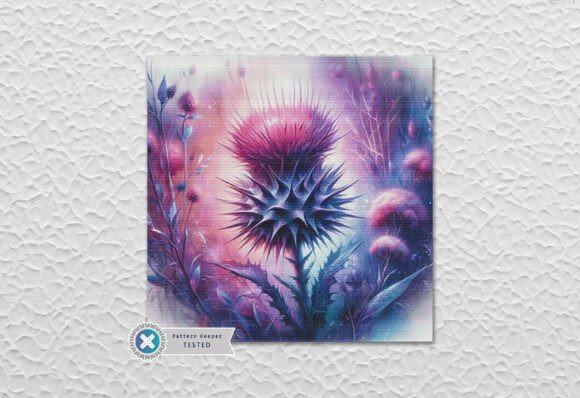
The Cross Stitch Pattern PDF Thistle Flower presents itself as a botanically detailed, full coverage pattern that leans toward the classic and decorative side of embroidery. The thistle is not overly playful or cartoonish, it carries a mature, grounded aesthetic that works well for brands that want to communicate authenticity, tradition, or natural quality. The 350 by 350 stitch count creates a substantial canvas, and with 90 DMC thread colors, the shading and depth available in this pattern are considerable.
At first glance, the design feels premium and handmade. It does not look like a generic clipart or a simplified logo style. Instead, it offers the kind of texture and detail that customers associate with carefully crafted products. For a small business, this instantly communicates that you invest in quality design assets. Whether you use it for an embroidered patch on an apron, a tote bag design, or a chest logo on a uniform, the thistle carries weight and visual interest.
However, because it is described as a cross stitch pattern rather than a native machine embroidery file, you will need to convert or adapt it for commercial embroidery machines. This is not uncommon for graphics that originate in the cross stitch world, and many digitizers can translate the grid-based pattern into a stitch file. But you should confirm that the resolution and color mapping transfer cleanly before you invest in sampling.
How This Design Performs in Real Business Use
When I consider the Cross Stitch Pattern PDF Thistle Flower for small business merch, I evaluate it across several common applications: embroidered patches, staff uniforms, aprons, caps, tote bags, work shirts, product packaging accents, and boutique merchandise. Here is how it performs in each context.
Embroidered Patches and Branded Labels
The thistle can be turned into an embroidered patch that looks like a handcrafted emblem. At the original size of 350 by 350 stitches, the patch would be large, around 25 inches wide on 14 count fabric or about 22 inches on 16 count. For most merchandise, that is too big for a standard patch. You would need to scale it down significantly, perhaps to 100 by 100 stitches or smaller, for use on caps, sleeves, or chest pockets. Scale it carefully: thistle petals and spiky leaves can lose definition if reduced too much, especially with 90 thread colors in the original. Test a scaled version in black and white first to see if the silhouette remains readable.
Apron Embroidery and Uniforms
For apron embroidery in a café, bakery, or florist shop, the full-size thistle could work beautifully on the center of an apron bib or as a large back design. The full coverage cross stitch nature means it will feel substantial and handcrafted. On a canvas or twill apron, the stitch density will be high, so you need a strong stabilizer to prevent puckering. For staff uniforms, consider using a smaller version on the chest or sleeve as a consistent brand mark. The thistle’s vertical shape fits well on sleeves and apron straps.
Cap Embroidery
Cap embroidery is always a challenge with detailed designs. The thistle’s fine petals and multiple thread colors require a larger hoop space than most cap frames allow. I would advise using only a simplified or cropped portion of the pattern for the front of a cap. The curved surface of a cap front can distort dense stitching, so reduce the thread count to around 10 to 15 contrasting colors for clarity. A small thistle silhouette in two or three colors can still carry the brand identity without overwhelming the cap.
Tote Bag Design
The tote bag design potential here is strong. A large tote bag provides enough flat surface to accommodate the full thistle pattern. The 25-inch square size on 14 count translates to a bold, center-stage graphic that reads as handmade and premium. For canvas totes, use a cutaway stabilizer to support the dense stitching. This application works well for handmade product lines, customer gifts, and event merch where you want the bag to become a keepsake.
Work Shirts and Product Packaging Accents
On custom apparel like work shirts, the thistle can serve as a back yoke design or a large chest emblem. For product packaging accents, such as a small embroidered label sewn into a handmade soap or candle, you would need a tiny version of the thistle at around 1 to 2 inches. That level of scaling may cause the intricate shading to merge into a solid shape, so test a simplified outline version for those applications.
Where to Use This Design Carefully
The Cross Stitch Pattern PDF Thistle Flower is not a one size fits all design. Here are the situations where I advise caution before production.
- Small patch sizes: Below 2 inches, the thistle loses its petal details and becomes a purple blur. Keep patches at least 3 inches wide for recognizable shape.
- Cap fronts: Curved surfaces and thick foam front panels do not handle high stitch density well. Reduce thread colors and simplify the shape.
- Curved surfaces: Sleeves, collars, and curved bag handles will distort the full coverage stitching. Use a small, simplified version or avoid curves altogether.
- Tiny lettering or fine outlines: The pattern has no lettering, but if you pair it with text, keep the text large and bold to match the thistle’s density.
- High stitch density: With 350 by 350 full cross stitches and 90 thread colors, the density is extreme. This increases production time and thread cost, so factor that into pricing.
- Textured fabric: Fleece, heavy knits, and loosely woven fabrics may distort the pattern. Use a stable woven or tight-weave fabric for best results.
- Dark uniforms: The pattern relies on color contrast. On dark fabric, you may need to adjust the background or use a lighter thread palette to keep the thistle visible.
- Items that need frequent washing: The dense stitching can shrink or pucker after repeated washing if not properly stabilized. Recommend cold wash and air dry for any garment with this patch.
Impact on Brand Identity and Customer Trust
For a small business, every design asset you use contributes to brand identity and customer perception. The Cross Stitch Pattern PDF Thistle Flower brings a distinctly handmade, artisan energy to your merchandise. Customers who see an embroidered thistle on an apron or tote bag immediately associate it with quality, care, and natural authenticity. That is a powerful positioning for a boutique, bakery, florist, or creative studio.
Using this design consistently across custom apparel, embroidered patches, and product labels builds visual consistency and professionalism. It tells customers that you pay attention to detail. For Etsy sellers and craft business assets, the thistle can become a signature motif that makes your products instantly recognizable. It also works well as a printable mockup for social media and product listings, giving your brand a cohesive look.
That said, if the design is poorly scaled, badly digitized, or stitched on the wrong fabric, it can damage customer trust. A distorted thistle reads as careless. Always create a finished product sample and test it in real lighting before offering it to customers. The handmade product aesthetic only works when the execution matches the intention.
Practical Embroidery Designer Notes
Before you commit the Cross Stitch Pattern PDF Thistle Flower to commercial embroidery, here are the steps I recommend based on my own design review process.
- Test it in black and white first: Print the pattern in grayscale to check contrast. If the thistle disappears at a small scale, it will not read well on fabric.
- Check if it works at small patch size: Digitize a version at 2 inches and 3 inches to see how much detail survives. You may need to drop to 15 to 20 thread colors for clarity.
- Review thread color contrast: The 90 DMC colors in the original are designed for cross stitch on evenweave fabric. For machine embroidery, select a subset with high contrast between petals, leaves, and background. Avoid colors that blend into your fabric choice.
- Inspect spacing: Full coverage cross stitch leaves no negative space between stitches. In machine embroidery, this creates a solid fill. Confirm that the digitized version includes proper pull compensation so the design does not distort.
- Confirm hoop size: At full size, this pattern requires a large hoop, likely 10 by 10 inches or larger. If your machine does not accommodate that, plan to scale down or stitch in sections.
- Test on real fabric: Always stitch a sample on the actual fabric you intend to use. Canvas, twill, denim, and cotton all react differently to dense stitching.
- Use proper stabilizer: A cutaway stabilizer is essential for this stitch density. Tear away stabilizer will not provide enough support, and the design may pucker or distort.
- Create a mockup for client approval: If you are producing this for a client or as part of a branded merch line, use a printable mockup to show placement and scale before stitching. This saves time and avoids costly rework.
- Compare it beside other design assets: If you already have logos, fonts, or other patterns in your brand library, stitch the thistle next to them to ensure visual harmony. Consistent style across all design assets strengthens brand recognition.
- Confirm commercial licensing before business use: Since this is a cross stitch pattern for advanced stitchers, check the license terms. Some cross stitch patterns and graphics are sold for personal use only. If you plan to sell finished products or patches, you need explicit commercial rights. Contact the designer if the listing does not specify commercial use.
The Cross Stitch Pattern PDF Thistle Flower offers real potential for small business merchandise, from embroidered patches to apron embroidery and tote bag design. Its botanical detail and full coverage structure give it a premium, handcrafted feel that builds brand trust and visual consistency. But success depends on careful scaling, proper digitizing, and thoughtful fabric choices. Treat this pattern as a design asset that requires adaptation, not a ready to stitch file.
If you are an Etsy seller, a boutique owner, or a creative studio looking for a signature motif, the thistle can become a defining element of your brand identity. Test it thoroughly, invest in good digitizing, and let the thistle grow your brand.